Most bedrooms in Pakistan are designed around a single piece, the bed, and then left there. The result is a room that functions but never quite feels finished, a place to sleep rather than a place to retreat to. A well-designed bedroom is built in layers instead, each one adding comfort and character until the room works as a whole. What follows works through those layers the way a designer would, from the foundation up.
Overview: Rather than a list of trends, this is a layered approach to bedroom design for Pakistani homes. It moves through five stages, the foundation, the focal point, seating, lighting, and finishing touches, so you can build a bedroom that feels considered at every level. Each layer works for a spacious master bedroom or a compact room, adjusted for scale.
Layer One: The Foundation
Every good bedroom starts with a calm base, and in a bedroom that means the walls, the flooring, and the overall palette. Soft, restful tones work best here, since the room's job is to help you wind down rather than energise you. Warm neutrals such as greige, muted taupe, and soft white create a foundation that feels serene and lets everything else stand out against it.
Keep bold colour for accents rather than the main walls. One deeper feature wall behind the bed adds depth without overwhelming a room meant for rest, while the remaining walls stay light to keep the space open. In a compact bedroom, sticking to a single light tone throughout makes the room feel larger than dividing it with contrasting colours.
Layer Two: The Focal Point
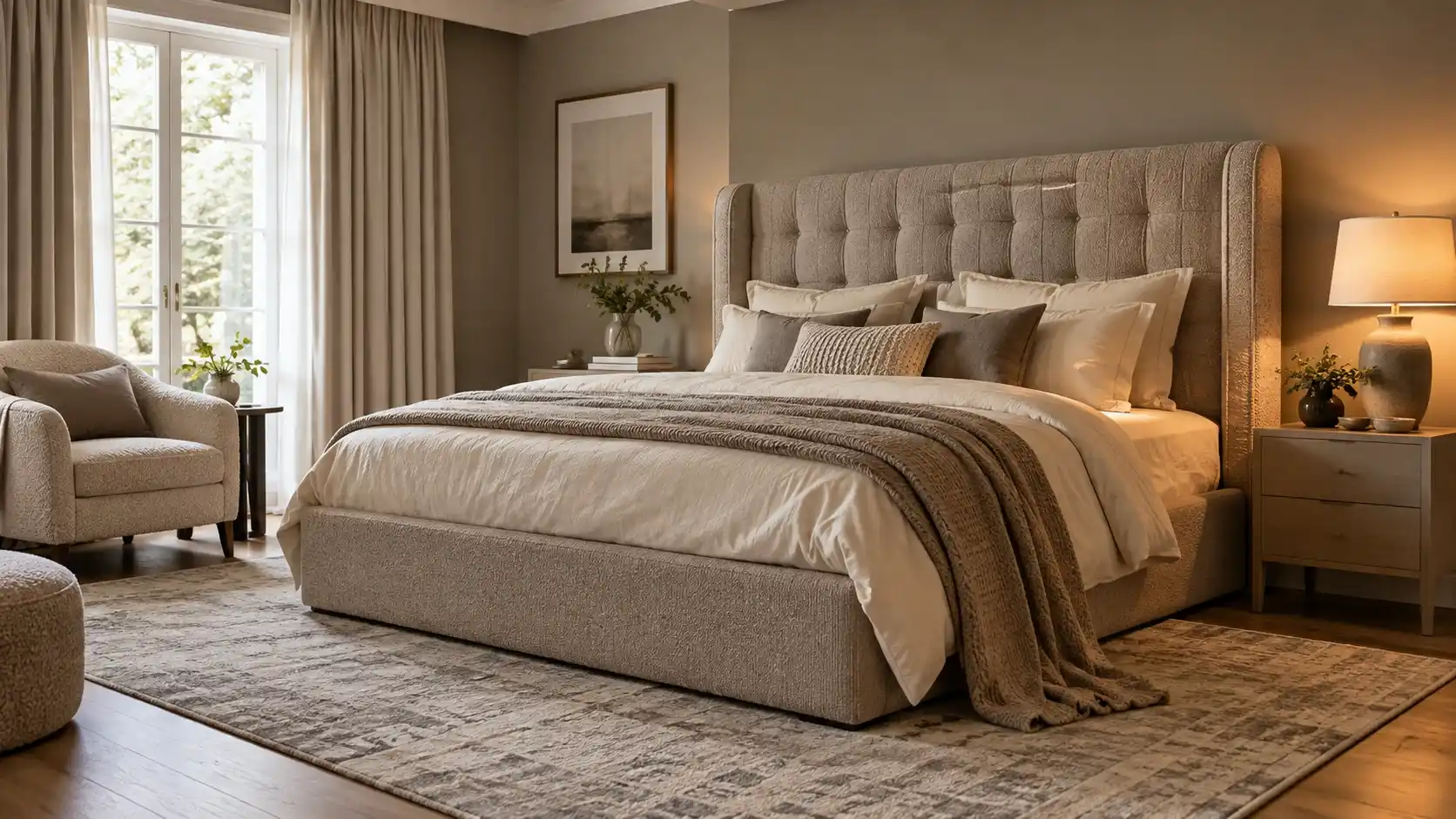
Once the base is set, the room needs an anchor, and in most bedrooms that is the bed and the wall behind it. This is where a modern bedroom earns its character. An upholstered headboard, a textured feature wall, or considered wall panelling turns a plain sleeping spot into a deliberate focal point. Keep the styling restrained: in a contemporary bedroom, one strong idea executed well beats several competing ones.
Position matters as much as the piece itself. Centre the bed on its wall where the room allows, leave balanced space on either side for symmetry, and resist crowding the focal wall with too many elements. A minimalist, well-composed focal point reads as far more premium than a busy one.
Layer Three: Seating and the Forgotten Corners
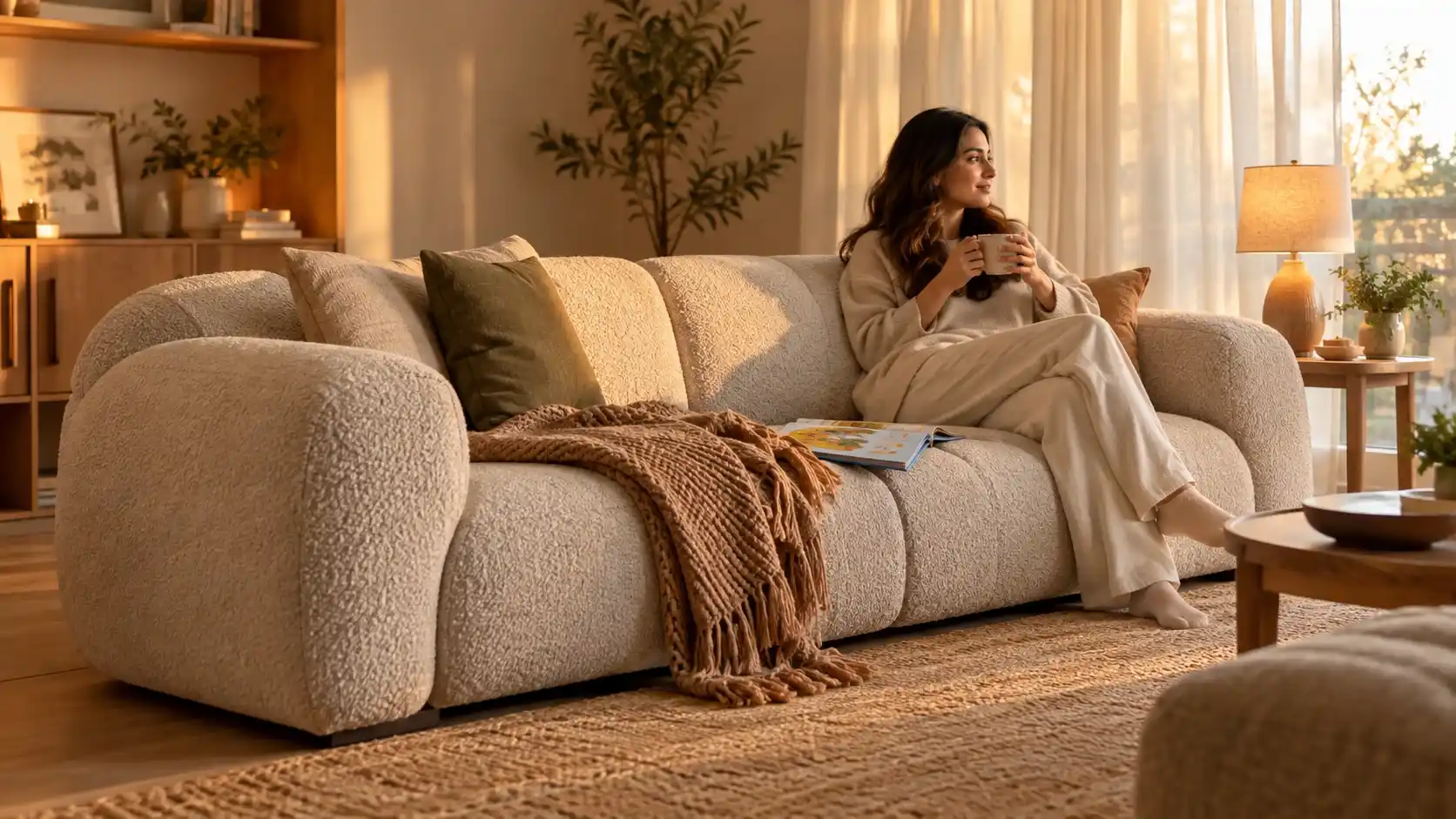
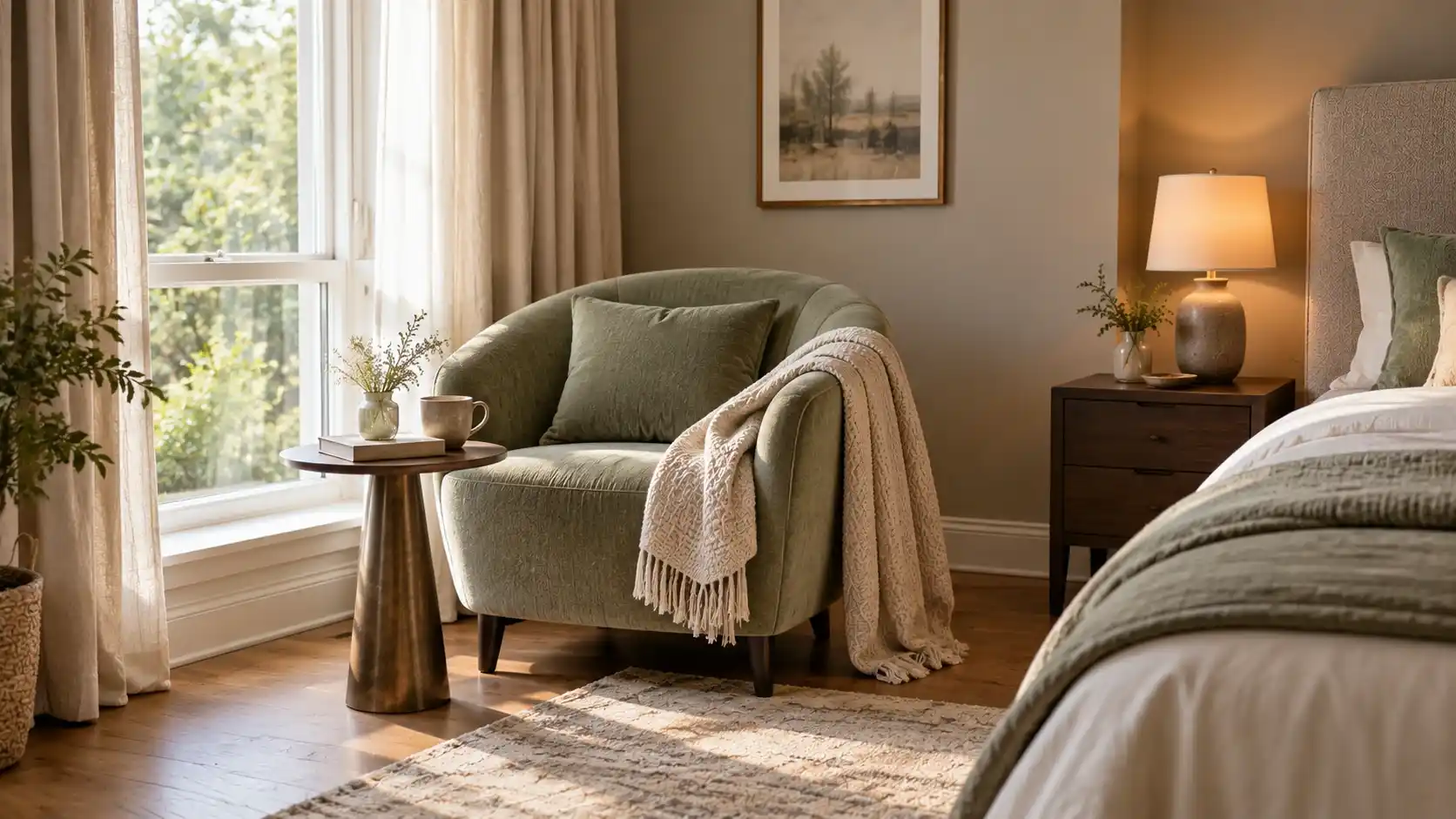
This is the layer most Pakistani bedrooms skip, and it is what separates a room that feels finished from one that does not. A bedroom is not only for sleeping. Somewhere to sit that is not the bed gives you a place to read, to have morning tea, or simply to put on your shoes.
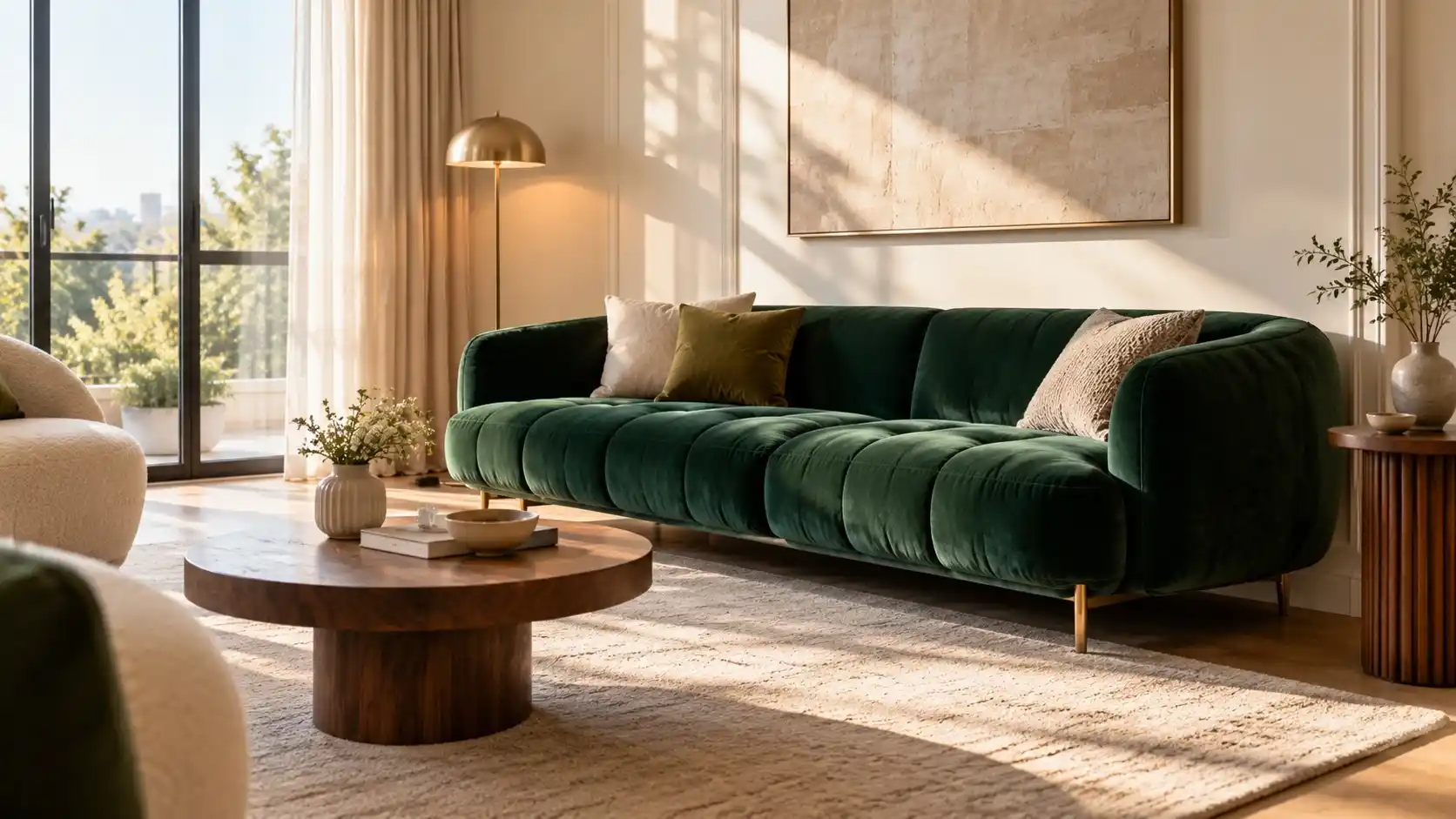
The options depend on the space. In a master bedroom, a single sofa chair beside the window creates an instant reading nook, while a low diwan along an empty wall adds a relaxed daybed for lounging that suits our tradition of sitting rooms within bedrooms. At the foot of the bed, a bench or ottoman is both practical and elegant, giving a spot to sit while dressing and a landing place for cushions at night. Even a compact bedroom can usually fit a slim footstool or a two seater in a corner. Choose the fabric for calm: boucle and jute suit a restful bedroom, while velvet adds a quiet touch of luxury.
Layer Four: Lighting in Layers
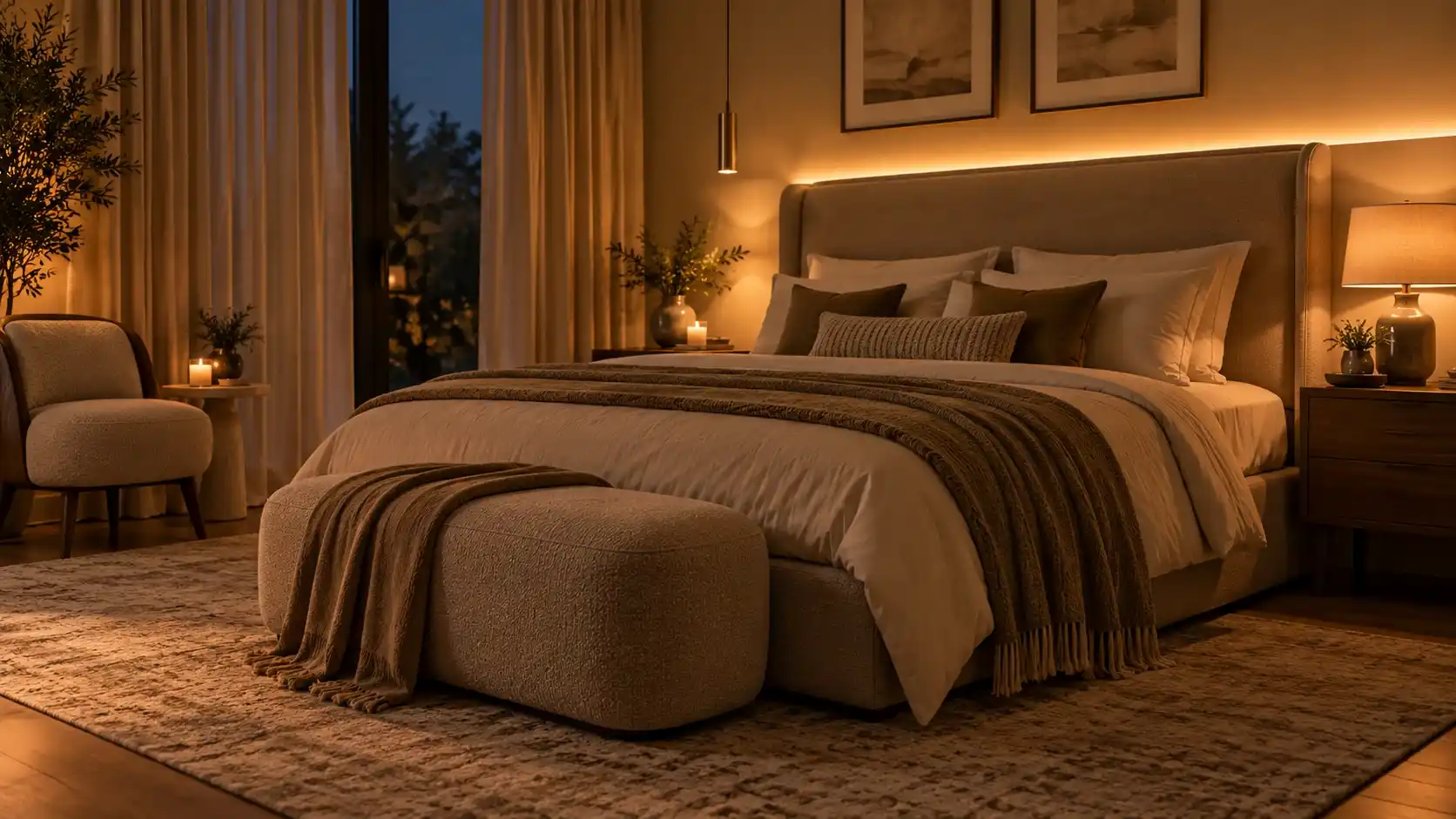
Lighting is what shifts a bedroom from functional to atmospheric, and one ceiling light cannot do it alone. A bedroom needs three kinds of light working together. General light from a central fixture handles the practical business of the room. Task light from bedside lamps or wall-mounted reading lights serves the moments you actually use the space, reading before sleep or getting ready. Accent light, whether a soft strip behind the headboard or a lamp on a dresser, adds the warm, low glow that makes a bedroom feel like a retreat in the evening.
Warm-toned bulbs suit a bedroom far better than cool white, which belongs in a kitchen or study. The goal is a room you can dim into calm rather than one lit like an office.
Layer Five: The Finishing Touches
The final layer is what makes the room feel personal and complete. Curtains should be full length and in a fabric that softens the room, ideally hung high and wide to make windows feel grander. Bedding in layered textures adds depth, and a single well-chosen rug anchors the bed and warms the floor underfoot. Keep surfaces largely clear, letting one or two considered objects speak rather than crowding every ledge.
Restraint is the theme that runs through every layer. A contemporary Pakistani bedroom looks its best when each element is chosen with intent and nothing competes for attention.
Designing a Smaller Bedroom
The same five layers apply to a small bedroom, adjusted for scale. Keep the palette light and consistent to open the space, choose a focal wall rather than a bulky headboard, and pick seating that earns its footprint, such as a slim footstool rather than a full armchair. Wall-mounted bedside lights free up floor space, and a single mirror placed to catch daylight makes the whole room feel larger. Good small bedroom design is less about fitting more in and more about choosing fewer, better pieces.
Building Your Bedroom, One Layer at a Time
Working through these layers, rather than buying a matching set and hoping it comes together, is what makes a bedroom feel genuinely designed. Start with a calm foundation, give the room a clear focal point, add seating that makes the space more than a bedroom, layer the lighting, and finish with intent.
Every ComfyClub seating piece, from bedroom sofa chairs to benches and diwans, is handcrafted to order in Lahore, so you can match the size, fabric, and colour to your bedroom exactly rather than settling for what a showroom has in stock.